
Published October 22, 2026
Can Your HOA Block Wildfire Upgrades in Oregon or WA?

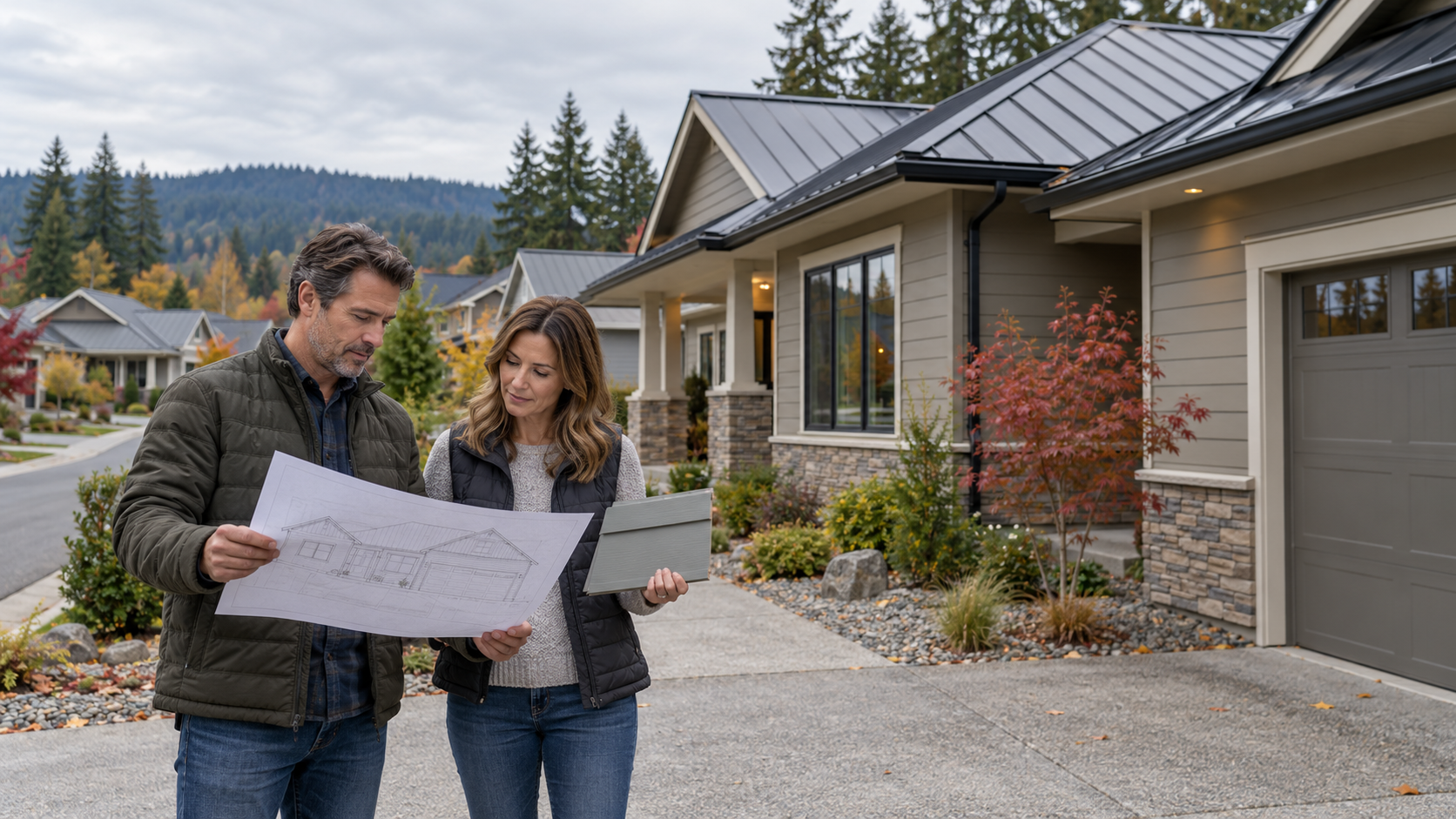
Can your homeowners association stop you from installing fire-hardened building materials?
No—not anymore in either state. Oregon's SB 1551 took effect June 5, 2026, and Washington's law followed on June 11. Both make existing CC&R provisions unenforceable when they prohibit fire-hardened building materials. Your association can still set reasonable appearance standards, but it can't use those standards as a backdoor ban. One major difference: Washington's protection expires January 1, 2028.
By Rick Sadle | October 14, 2026
If your insurer wants a metal roof, fiber-cement siding, or ember-resistant vents and your HOA has been saying no, the law is now on your side.
Oregon and Washington both passed laws this year that limit an association's ability to block those upgrades. These are separate from the other 2026 Oregon real estate law changes that got all the attention this spring. They took effect six days apart in June. If your HOA has turned down an upgrade, it's worth checking how these laws apply.
Here's what changed and what to check before you start a project or buy or sell a home in an HOA.
What Oregon's SB 1551 Does
Oregon's SB 1551 became Chapter 86 of the 2026 laws and took effect June 5, 2026.
It does two things.
It voids the restriction. A provision in any recorded document, including a declaration, is void and unenforceable to the extent it would prohibit you from installing, using, or maintaining fire-hardened materials on your residential property — or from removing non-fire-hardened materials, including fences and other structures. Fences matter here. A wood fence running up to the side of a house is one of the most common ways fire reaches a structure, and old CC&Rs in this region very often mandate wood fencing by name.
It limits what the HOA can still do. An association keeps its general powers, but a governing-document provision is void where it limits the design, dimensions, placement, maintenance, or exterior appearance of fire-hardened materials in a way that either has the practical effect of prohibiting all fire-hardened materials, or forces you into materials costing substantially more than comparable alternatives.
Your HOA can still regulate the siding color. It can't use that color rule to make fire-hardening the house impossible or unreasonably expensive.
The 90-day clock is the part to remember
Oregon added a deadline that works in your favor. When you apply to your association, your application is deemed approved unless the association issues a written denial or a modification request within 90 days. A denial has to explain its basis in reasonable detail, and it can't be arbitrary or capricious.
Keep a record of when you submit the application. If an Oregon board simply ignores a complete application for 90 days, the application is approved.
SB 1551 also applies to recorded documents and governing documents executed before, on, or after the effective date. A 1994 CC&R that bans metal roofing is already unenforceable on this point. Nobody has to amend anything.
Washington Did the Same Thing — With an Expiration Date
Washington adopted its version through Substitute Senate Bill 6054, Chapter 180, effective June 11, 2026. It added parallel sections to three chapters — RCW 64.38, 64.34, and 64.90 — so it reaches homeowners associations, condominiums, and common interest communities alike. Washington included condominiums. Oregon's planned-community language doesn't clearly cover the same attached housing.
The basic protection is similar to Oregon's. Governing documents may not prohibit installing, using, or maintaining fire-hardened materials, so long as the material meets applicable health and safety standards and state and local permitting requirements. Associations may still adopt reasonable rules about design, dimensions, placement, or exterior appearance — but those rules must not prohibit the materials, must not make their use infeasible, and must leave at least one reasonable option that meets wildfire-resistant standards without significantly increasing cost.
Washington's version is retroactive too: it applies to governing documents in effect on June 11, 2026, and conflicting provisions are void and unenforceable.
There are three differences to watch:
- No deemed-approval clock. Washington's statute sets no review period. If your board sits on your application, you don't get Oregon's automatic yes.
- Explicit carve-outs. The law gives you no right to install materials on property someone else owns, on leased property without the lessor's permission, or on a common element. In a Washington condo, the exterior wall is usually a common element — so this law may do less for you than you'd hope, and the association's own obligations govern.
- It expires January 1, 2028. The statute says so on its face.
The expiration date is the practical issue for Washington owners. The protection is in effect now, but what happens after January 1, 2028 depends on a future Legislature. If you're in a Clark County association and already considering a hardening project, don't assume the current rule will still be available later.
What Both Laws Define as "Fire-Hardened"
Both states use the same three-part definition. A material qualifies if it meets any one of:
- The wildland-area construction criteria in the most recent International Wildland Urban Interface Code
- The wildland-area criteria in the most recent NFPA 1140 standard
- The requirements for a Wildfire Prepared Home set by the Insurance Institute for Business and Home Safety
You don't have to satisfy all three standards, but you do need to satisfy one. A salesperson calling a product fire-resistant isn't enough. Get the manufacturer's documentation showing which standard the material meets and include it with the application.
What This Means If You're Buying or Selling
The next step depends on whether you're selling, buying, or trying to keep your insurance.
If you're selling in an HOA community, a hardening project you completed under these laws is a selling point worth documenting — especially given how much harder insurance has gotten to place in parts of this metro. Keep the permits, the product documentation, and the association's approval (or the dated application that went unanswered past 90 days in Oregon). A buyer whose insurance quote depends on roof class will want it.
If you're buying into an HOA community, the CC&Rs you receive in your resale packet may still contain the banned language. It's void on this point, but it's still printed, and plenty of boards haven't caught up. Reading those documents properly matters when you buy a condo or a home in a planned community. This is one more thing to check. Ask the association directly whether it has adopted rules on fire-hardened materials since June 2026, and get the answer in writing.
If insurance is the reason you're here, check with your carrier before choosing materials. Carriers in Oregon and Southwest Washington have been tightening in wildland-interface areas, and a roof or siding upgrade is often what moves a quote. If you've been non-renewed or can't place coverage at all, find out what your carrier requires before you start the HOA process.
Your wildfire exposure, your CC&Rs, and what your insurance carrier will actually credit are three separate questions. Get answers to all three before you spend money on materials.
Frequently Asked Questions
My CC&Rs were recorded in 1998 and require cedar shake roofs. Are they still enforceable?
Not on this point. Oregon's SB 1551 applies to recorded documents executed before, on, or after June 5, 2026, and Washington's law applies retroactively to governing documents in effect June 11, 2026. A provision prohibiting fire-hardened materials is void to that extent — no amendment vote required.
Can my HOA still make me match the neighborhood's look?
Within limits. Both states let associations keep reasonable rules on design, dimensions, placement, and exterior appearance. What they can't do is apply those rules so that no fire-hardened option is possible, or so that the only permitted option costs substantially more than comparable alternatives.
What happens if my Oregon HOA just ignores my application?
Under SB 1551, your application is deemed approved if the association doesn't issue a written denial or modification request within 90 days. Any denial must explain its basis in reasonable detail and can't be arbitrary or capricious. Washington's statute has no equivalent deadline.
Does this let me replace my wood fence?
In Oregon, yes — SB 1551 expressly covers removing non-fire-hardened materials including fences and other structures. In Washington, the law covers materials on your property but gives you no right over common elements or property you don't own, so a fence on a shared boundary needs a closer look.
Why does Washington's law expire in 2028?
The statute includes an expiration date of January 1, 2028 in each new section. I don't know the Legislature's reasoning and won't speculate. What it means practically is that the protection is certain now and uncertain after that date.
What to Do Next
If an HOA in this metro previously rejected your wildfire upgrade, that answer may no longer be enforceable. Gather the product documentation and submit a new written request. In Oregon, keep proof of the submission date because the 90-day clock matters.
If you're deciding whether to complete the upgrade or sell instead, send me the property address and the proposed work. I'll help you look at the resale value, insurance issue, cost, and timing before you commit.
Sources
- Oregon Legislative Information System, SB 1551 (2026 Regular Session) — enrolled, 2026 Chapter 86
- SB 1551 Enrolled text — definitions, void provisions, 90-day approval, applicability
- Oregon Real Estate Agency, 2026 Legislative Update
- RCW 64.90.582 — Fire-hardened building materials
- Washington State Legislature, Substitute Senate Bill 6054, Chapter 180, Laws of 2026 — effective date, retroactivity, expiration
Rick Sadle is a licensed real estate broker, not an attorney, a CPA, or a licensed contractor. The legal and regulatory information above is general and current as of October 14, 2026; statutes change, and Washington's provision carries a stated expiration date. Confirm how any of it applies to your property, your CC&Rs, and your insurance with a qualified attorney and your carrier before you commit to a project.
About Rick Sadle
Rick Sadle is the Principal Broker and CEO of The Sadle Home Selling Team at Keller Williams Realty Professionals, serving the Portland, Oregon and Vancouver, Washington real estate markets. With more than 20 years of real estate experience, over 3,500 homes sold and more than $1 billion in team sales volume, Rick is one of the Portland area's most experienced real estate professionals. He is also a weekly real estate expert on KXL 101 FM, where he discusses the Portland and Vancouver housing markets, mortgage rates, housing trends and the economy. Rick is an Oregon-licensed Principal Broker and Washington-licensed Broker.
or another way