
Published July 24, 2026
Property Taxes in Portland vs. Vancouver, WA: 2026 Comparison

Are property taxes lower in Vancouver, WA than in Portland, OR?
Effective property tax rates across the Portland–Vancouver metro are closer than most buyers expect — generally 0.85% to 1.1% of a home's market value on both sides of the Columbia River. Washington taxes 100% of your home's current market value every year, while Oregon's Measure 50 caps a home's taxable assessed value and — unlike almost every other state — that capped value does not reset when you buy. That single difference, not the headline rate, usually decides whose property tax bill comes out lower.
By Rick Sadle | July 24, 2026
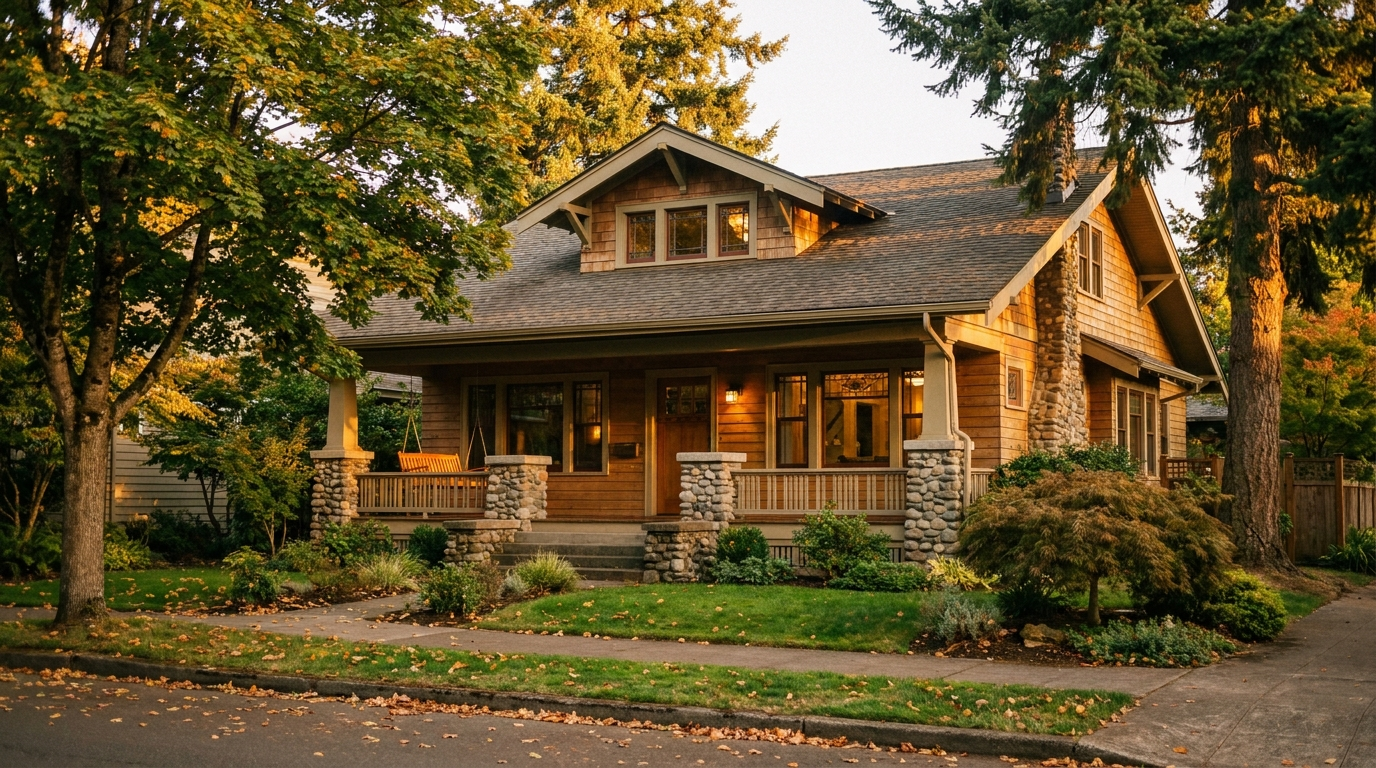
If you're shopping both sides of the river — a Craftsman in Alameda or Laurelhurst on the Oregon side, or new construction in Felida, Salmon Creek, or Camas on the Washington side — property taxes probably feel like they should be a tiebreaker. Everybody "knows" Washington has no income tax and Oregon has no sales tax, so surely the property tax picture is just as lopsided.
It isn't. On property tax specifically, the two sides of the metro are much closer than the reputation suggests. What actually moves your bill is how each state assesses and limits taxes — and that mechanism rewards different buyers in different situations.
Here's how it really works, and what a $400,000 to $800,000 home costs to hold on each side.
The real difference isn't the rate — it's what gets taxed
Washington and Oregon tax homes on completely different systems. Understanding this is the whole ballgame.
Washington (Clark County / Vancouver, Camas, Washougal): Your home is assessed at 100% of its true and fair market value every year, under state law (RCW 84.40.030). When values rise, your assessment rises with them. Two guardrails keep the system from running away: the state constitution caps regular, non-voted levies at $10 per $1,000 of value (1%), and Chapter 84.55 RCW limits most taxing districts to growing their total collections by just 1% per year unless voters approve more. Voter-approved school and bond levies stack on top of that 1% regular cap, which is why a real Vancouver tax bill can land above 1%.
Oregon (Multnomah, Clackamas, Washington counties / Portland): Oregon doesn't tax your market value at all — it taxes your assessed value, which is usually much lower. Two 1990s ballot measures built this:
- Measure 5 caps the tax itself at $5 per $1,000 of real market value for schools and $10 per $1,000 for general government.
- Measure 50 rolled every home's assessed value back to its 1995–96 level minus 10%, then capped how fast that assessed value can grow at 3% per year — no matter how fast the market climbs.
Because Portland-area home values have risen far faster than 3% in most years since 1997, the taxable assessed value on a typical Oregon home has drifted well below what the house would actually sell for.
The wrinkle that catches buyers off guard
Here's the part almost nobody tells you before they cross the river to shop: in Oregon, the assessed value does not reset when the home sells.
Oregon is the only state where a home's assessed value doesn't snap back up to market value when an existing property changes hands. If the sellers held that Sellwood-Moreland bungalow for 20 years, its assessed value may sit 40% to 55% below today's market price — and when you buy it, you inherit that low assessed value. Your tax bill is based on the seller's suppressed number, not your purchase price.
Washington works the opposite way. Buy in Vancouver and your home is assessed at full market value the very next cycle. You and your long-tenured neighbor with an identical house pay roughly the same — because you're both taxed on what the homes are worth today.
What a $400,000–$800,000 home actually costs to hold
Let's put numbers to it. These are illustrative estimates to show the shape of the decision — your exact bill depends on your specific tax code area, levies, and (in Oregon) the assessed value that comes with the house. Always confirm with the county assessor before you rely on a figure.
Rough effective rates (annual tax as a share of market value), drawn from county and state data for 2026:
| County (side) | Approx. effective rate on market value | Illustrative tax on a $600,000 home |
|---|---|---|
| Multnomah, OR (Portland) | ~0.95%–1.05% | ~$5,700–$6,300 |
| Clackamas, OR | ~0.85%–1.0% | ~$5,100–$6,000 |
| Washington, OR | ~0.85%–1.0% | ~$5,100–$6,000 |
| Clark, WA (City of Vancouver) | ~1.0%–1.1% | ~$6,000–$6,600 |
Using Clark County's certified 2026 rates, a representative City of Vancouver tax code area totals roughly $11 per $1,000 of value, which pencils out to about:
- $400,000 home: ~$4,400 per year
- $600,000 home: ~$6,600 per year
- $800,000 home: ~$8,800 per year
Notice that the City of Vancouver — with its city levy and voter-approved Vancouver School District levies stacked on top — actually sits at the higher end of the metro, not the lower end. Unincorporated Clark County and smaller towns generally run cheaper than the city itself.
Now the Oregon twist. That same $600,000 house on the Portland side might show a market-based effective rate near 1%, but if it's a long-held home with a suppressed Measure 50 assessed value, the real bill could be materially lower — sometimes closer to $3,500–$4,500 — because you're taxed on an assessed value far below the sale price. A brand-new Portland-area home, or one that just had major improvements added to its assessed value, won't get that break.
So the honest answer is: it depends on the specific house. A newer or recently reassessed Oregon home and a City of Vancouver home can cost about the same to hold. A long-owned Oregon home with a deeply suppressed assessed value can be the cheapest option in the whole metro — even though Oregon's headline rate looks higher.
This is exactly the kind of number I pull for clients before they fall in love with a listing. Two houses at the same price, one in Camas and one in Laurelhurst, can carry very different annual costs, and it's rarely obvious from the listing sheet.
The bigger border picture
Property tax is only one line on the ledger, and if you zoom out, the Oregon–Washington trade-off is the classic one: Oregon has a state income tax but no sales tax; Washington has a sales tax but no state income tax. For a high-earner, the Washington side can win big on income tax even if the property tax is a wash. For a retiree drawing modest income, Oregon's income tax may barely register while Washington's sales tax nicks every purchase.
Property tax, by itself, rarely decides the border question. But it's the one people most often guess wrong about — assuming Washington is automatically cheaper when, home for home, it frequently isn't.
A few practical takeaways:
- Don't shop by state reputation — shop by the actual tax record on the specific home. In Oregon, ask for the property's current assessed value, not just the asking price.
- On the Washington side, expect your assessment to track market value and to be reassessed annually. Budget for the full-value bill from day one.
- Voter-approved levies matter. Two homes a mile apart in Clark County can sit in different tax code areas with different school and fire levies.
- Property tax is one piece of a much larger affordability math that includes income tax, sales tax, insurance, and commute.
Frequently Asked Questions
Does buying a home in Oregon reset its property taxes to my purchase price?
No. Oregon is the only state where a home's assessed value does not reset to market value when an existing property sells. You inherit the seller's Measure 50 assessed value, which on a long-held home can be well below what you paid — often a meaningful, lasting savings.
Is Vancouver, WA cheaper on property taxes than Portland?
Not automatically. Effective rates on both sides mostly fall between about 0.85% and 1.1% of market value, and the City of Vancouver actually sits toward the higher end because of its city and school levies. Whether Portland or Vancouver is cheaper depends on the specific home's assessed value and tax code area.
How much can my property taxes go up each year?
In Oregon, Measure 50 caps growth in your taxable assessed value at 3% per year, aside from exceptions like new construction or major improvements. In Washington, there's no cap on your individual assessment, but Chapter 84.55 RCW limits most districts to 1% annual growth in total collections unless voters approve more — so bills still move with market values and levies.
Which is more, a Portland or a Vancouver property tax bill on a $600,000 home?
As a rough illustration, a City of Vancouver home near $600,000 runs about $6,600 a year, while a Portland-area home of the same price ranges from roughly $3,500 on a long-held, low-assessed property up to about $6,300 on a newer or recently reassessed one. The Oregon assessed-value history is the deciding factor.
Where do I find the exact property tax for a home I'm considering?
Pull the property's record from the county assessor — Multnomah, Clackamas, or Washington County in Oregon, or Clark County in Washington. The record shows the current assessed value, tax code area, and the most recent bill, which is far more reliable than any online estimate.
The bottom line
Property taxes across the Portland–Vancouver metro are closer than the "no income tax vs. no sales tax" headlines suggest — and Oregon's assessed-value rules can quietly make a long-held Portland home the cheapest to hold in the whole region. The only way to know what a specific home will cost you is to look at its actual assessment, not its list price.
If you're weighing the Oregon and Washington sides for your next move, I'm happy to pull the real tax records on any homes you're considering and lay the numbers side by side. Reach out anytime.
This article is general information from a licensed real estate broker, not tax or legal advice. Property tax rules, rates, and assessed values change, and your situation may differ — confirm any figure with the county assessor and consult a CPA or tax professional before making a decision.
About Rick Sadle
Rick Sadle is a 21-year veteran of the Portland-Vancouver real estate market and Principal Broker and CEO of the Sadle Home Selling Team | Keller Williams Realty Professionals, which he and Carolyn Sadle founded in 2004. A licensed Principal Broker in Oregon and licensed Broker in Washington, Rick is a regular real estate expert on FM News 101 KXL and specializes in luxury homes, residential sales, and investment properties throughout the Portland Metro and Southwest Washington area.
Sources
- Clark County Treasurer — 2026 Tax Rates by District: clark.wa.gov/treasurer/tax-rates
- Washington State Legislature — RCW 84.40.030 (100% of true and fair value): app.leg.wa.gov/rcw/84.40.030
- Washington State Legislature — Chapter 84.55 RCW (1% levy limit): app.leg.wa.gov/rcw/84.55
- Washington State Department of Revenue — Property tax valuation: propertytax.dor.wa.gov/programs/valuation
- Oregon Department of Revenue — A Brief History of Oregon Property Taxation (Measures 5 & 50): oregon.gov/DOR (303-405-1.pdf)
- League of Oregon Cities — FAQ on Measures 5 & 50: orcities.org FAQ on Measures 5 & 50
- Multnomah County — 2025–2026 Summary of Assessments and Taxes: multco.us Summary of Assessments and Taxes
or another way