
Published August 10, 2026
What Happens After a Home Inspection in Portland vs. Vancouver?

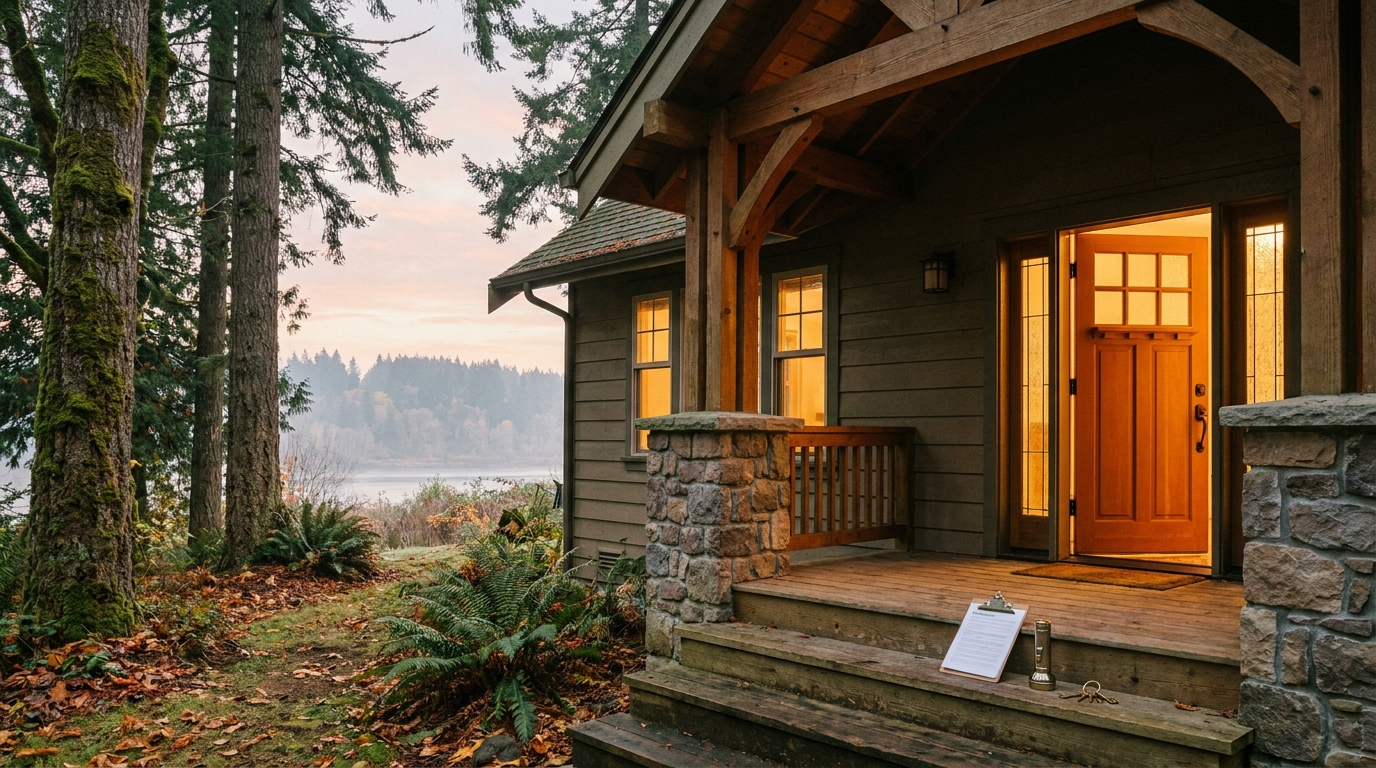
What are your options after a home inspection in Portland or Vancouver?
After a home inspection in Portland or Vancouver, you have four moves: accept the home as-is and move forward, ask the seller to make repairs, ask for a repair credit or a price reduction, or terminate the contract and get your earnest money back. In Oregon, this plays out through the Licensed Professional Inspections section of the OREF sale agreement and a Buyer’s Repair Addendum. In Washington, it runs through NWMLS Form 35 and the Form 35R inspection response. The mechanics differ by state, and in 2026’s more balanced market, buyers have more room to negotiate than they did during the bidding-war years.
By Rick Sadle | August 6, 2026
The inspection report lands in your inbox, and it’s twelve pages of findings (which it seems like it always is). A furnace near the end of its life. Some knob-and-tube wiring in the attic. A crawl space with more moisture than anyone wants to see. Your first reaction is usually panic. Your second should be a plan.
Here’s what I tell every buyer who calls me the day their report comes back: an inspection is not a pass/fail test, and a long list of items is normal — even on a well-kept home. What matters is what you do next, and the process for doing it is different depending on whether you’re buying in Oregon or across the river in Washington.
Your four options after the inspection
No matter which side of the Columbia you’re on, the inspection response comes down to four choices:
- Accept the home as-is and proceed. The report gave you information, you’re comfortable with it, and you move toward closing without asking for anything.
- Request repairs. You ask the seller to fix specific items before closing. I usually try to get my client to at least think about the health and safety related items.
- Request a credit or a price reduction. Instead of repairs, you ask for money — either a credit toward your closing costs or a lower purchase price — and handle the work yourself after you own the home. This can sometimes be a challenge depending on the repairs and whether or not there is an appraisal involved. Sometimes an appraiser will require specific repairs before they can sign off on the value.
- Terminate the contract. If the findings are serious enough, you walk away and recover your earnest money, as long as you act within your inspection timeline.
The right choice depends on the home, your budget, and how much competition there is for the property. What changes from Oregon to Washington is the paperwork and the deadlines that govern how you exercise those options.
How it works in Oregon (Portland and surrounding metros)
In Oregon, your inspection rights live inside the Licensed Professional Inspections section of the OREF-001 Residential Real Estate Sale Agreement — the standard contract used across Multnomah, Clackamas, and Washington counties and beyond.
A few things to know:
- The default inspection period is 10 business days, and business days exclude weekends and holidays. All inspections and negotiations need to wrap by 5:00 p.m. on the final day of that period. The clock starts the day after the agreement becomes binding.
- If you want repairs or money, you submit an OREF-022A Buyer’s Repair Addendum asking the seller to make repairs, reduce the price, or provide a credit in lieu of repairs.
- If the inspection turns up something you can’t live with and no deal gets reached, you can unconditionally disapprove of the property and terminate, and your earnest money is returned.
Here’s the Oregon nuance that surprises people: if you and the seller can’t agree on the repair addendum, you as the buyer have the right to terminate — the seller does not. And if you take no action at all by the deadline, you’re generally deemed to have accepted the property in its current condition. Silence is not your friend here.
How it works in Washington (Vancouver and Clark County)
Across the river, the inspection contingency runs through NWMLS Form 35, the Inspection Addendum, with your response given on Form 35R.
The structure is a little more formal than Oregon’s:
- The default inspection period is 10 days if the parties don’t write in something shorter — commonly 5 to 10 days after mutual acceptance.
- After your inspection, Form 35R lets you approve the inspection and move ahead, disapprove and terminate (earnest money returned), or request repairs or modifications from the seller.
- If your inspector recommends a specialist and you give timely notice, you can usually get an additional 5 days to complete those follow-up inspections.
- The back-and-forth runs on tight response windows — often three days at a step — so a Washington inspection negotiation can move fast.
As in Oregon, the Washington seller is not required to make any repairs. They can agree, decline, or counter. If you can’t reach an agreement within your timeline, you can terminate and keep your earnest money. Miss the deadline, though, and you can waive the contingency without meaning to.
Repairs, a credit, or a price cut — which should you ask for?
This is where a good agent earns their keep, because the three “money” options are not equal.
Repairs make sense for safety issues and major systems — a failing furnace, an active roof leak, faulty wiring — especially when you don’t have the cash or time to deal with them after closing. The downside is that you’re trusting the seller’s chosen contractor and timeline. Although you can ask for a specific contractor, but that can raise all sorts of other issues.
A price reduction lowers your loan and your long-term cost, but the monthly impact is smaller than most buyers expect. On a $550,000 home with 20% down at roughly 6.7%, a $5,000 price cut trims your loan by about $4,000 and lowers your payment by only about $26 a month — around $310 a year.
A closing-cost credit of that same $5,000 keeps $5,000 in your pocket at the closing table, which for many buyers is the more useful lever — cash now to hire your own contractor, replace the water heater, or simply cushion your reserves.
There’s no universal right answer. The best move depends on whether your bigger constraint is cash today or cost over time, and on how badly you want this specific home.
What sellers actually agree to fix
Sellers are most likely to respond to safety hazards, major defects, and anything that affects the home’s basic function — the items a future buyer’s inspector would flag anyway. It also helps to read the inspection findings against what the seller already disclosed; a defect that shows up on the report but not the disclosure changes the conversation. Cosmetic requests and long lists of minor items tend to get declined, or they sour the negotiation.
In 2026, the leverage math has shifted. The Portland metro has moved into a more balanced market, with a typical home value around $550K and roughly 3.3 months of supply, and homes sitting longer than they did a couple of years ago. Vancouver and Clark County are a bit tighter — a median sale price in the low to mid $500's and inventory that still leans toward sellers — but nothing like the frenzy of the bidding-war era. In both markets, buyers today generally have more room to ask for repairs or credits than they did in 2021 or 2022, when waiving the inspection was common. I’d caution any buyer against waiving the inspection contingency just to win a home — along with the appraisal contingency that protects you if the appraisal comes in low, it’s one of the few protections that lets you renegotiate or walk with your deposit intact.
This is exactly the kind of decision I walk my clients through line by line once the report comes in — what to ask for, what to let go, and how to frame the request so the seller says yes.
Frequently Asked Questions
How long do I have to do a home inspection in Oregon or Washington?
In Oregon, the OREF sale agreement defaults to a 10-business-day inspection period, with business days excluding weekends and holidays. In Washington, NWMLS Form 35 defaults to 10 days, though buyers and sellers often negotiate a shorter window. Both periods are negotiable in the contract.
Can I get my earnest money back if the inspection is bad?
Yes, as long as you act within your inspection timeline. In Oregon you can unconditionally disapprove and terminate; in Washington you disapprove on Form 35R. In both states, a timely termination based on the inspection returns your earnest money. Miss the deadline and you can lose that protection.
Does the seller have to make the repairs I ask for?
No. In both Oregon and Washington, sellers are not required to make any repairs after an inspection. They can agree, decline, or counter your request. If you can’t reach an agreement within your inspection period, your remedy is to terminate the contract, not to force the repairs.
Should I ask for repairs or a credit?
It depends on your priorities. Ask for repairs when safety or major systems are involved and you’d rather the work be done before you own the home. Ask for a credit when you want cash at closing to handle the work yourself and control the outcome. A price reduction helps your long-term cost but changes your monthly payment less than most buyers expect.
Is it safe to waive the inspection contingency in 2026?
In today’s more balanced Portland and Vancouver markets, there’s usually no need to. The inspection contingency is your main protection to renegotiate or walk away with your earnest money, and waiving it means taking the home’s condition entirely as-is. If you’re competing for a home, there are less risky ways to strengthen your offer.
If you’re staring at an inspection report and trying to decide what to ask for, that’s a decision worth making with someone who negotiates these every week. The forms and deadlines are different in Oregon and Washington, and the right ask depends on the home and the market it’s in. If you’re working through this for your own purchase, a good real estat agent can walk you through it.
This article is general information, not legal or tax advice. Real estate contract terms, forms, and deadlines change and vary by transaction — verify the specifics with your agent, and consult an attorney or CPA for legal or tax questions before you act.
About Rick Sadle
Rick Sadle is the Principal Broker and CEO of The Sadle Home Selling Team at Keller Williams Realty Professionals, serving the Portland, Oregon and Vancouver, Washington real estate markets. With more than 20 years of real estate experience, over 3,500 homes sold and more than $1 billion in team sales volume, Rick is one of the Portland area’s most experienced real estate professionals. He is also a weekly real estate expert on KXL 101 FM, where he discusses the Portland and Vancouver housing markets, mortgage rates, housing trends and the economy. Rick is an Oregon-licensed Principal Broker and Washington-licensed Broker.
or another way