
Published July 31, 2026
Is It a Buyer's or Seller's Market in Portland & Vancouver? (2026)

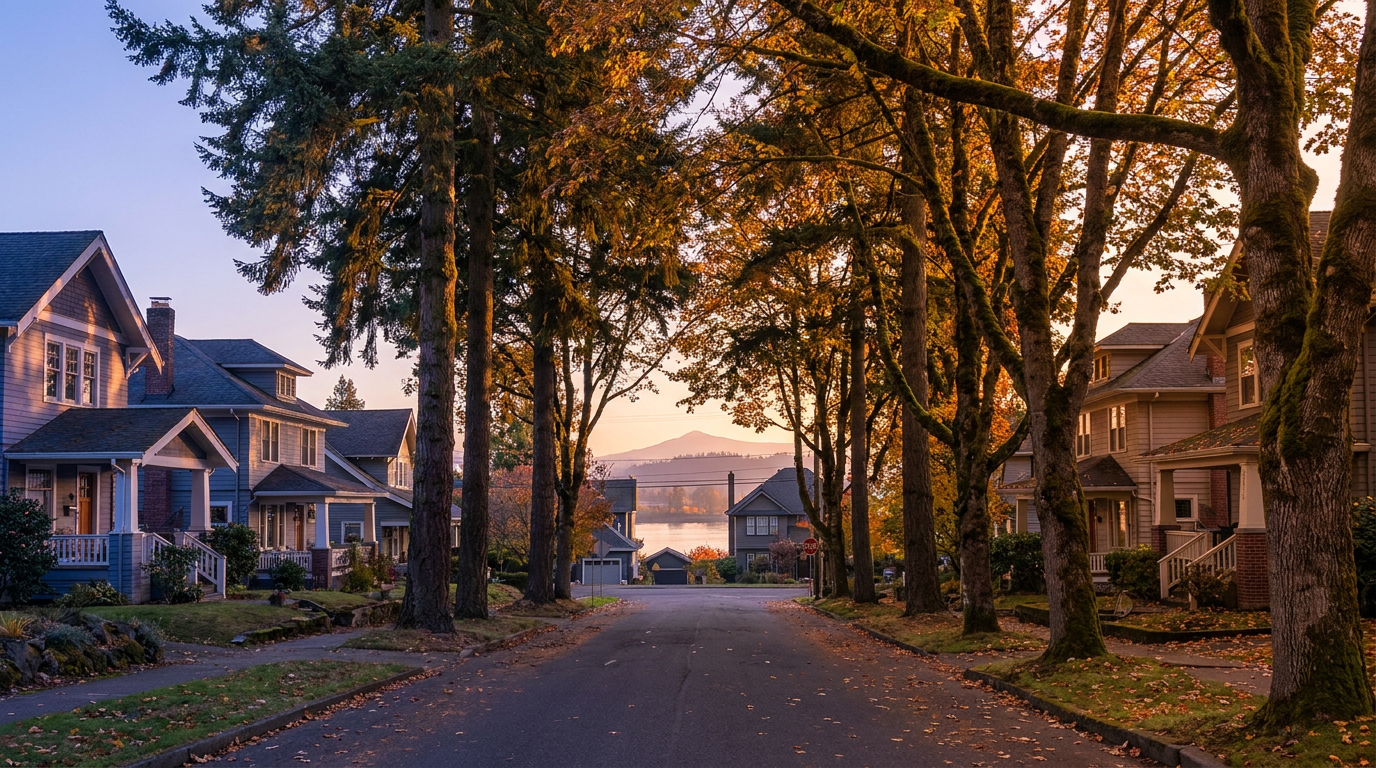
Is it a buyer's or seller's market in Portland and Vancouver right now?
As of mid-2026, the Portland–Vancouver metro is best described as a market moving toward balance — not a hot seller's market, and not quite a buyer's market either. Inventory has grown and buyers have real negotiating room for the first time in years, yet homes that are priced right still sell in about 55 days. In June 2026 the RMLS Portland Metro median sale price was $564,900 (down about 0.9% year over year), and across the broader Washington/NWMLS region the median was $650,000 (down 3.0%). What that means for you depends less on the headline and more on whether you're buying or selling — and how a home is priced.
By Rick Sadle | July 31, 2026
"Is it a good time to buy?" and "Should I sell now or wait?" are the two questions I get asked most right now, and they're really the same question wearing different hats: who has the leverage in this market?
Here's the honest answer for the Portland and Vancouver area in 2026: leverage is shifting. It's no longer the frantic, waive-everything seller's market of a few years ago. But it hasn't tipped into a true buyer's market either. We're in the in-between — and the in-between is actually where good decisions get made.
Let me show you what the numbers say, then what they mean for your specific situation.
What the June 2026 numbers actually show
Real estate agents love to say "it's a great time to buy and sell." That's not helpful. So here's the current data from the two MLS systems that cover our metro.
Portland, Oregon side (RMLS Portland Metro, June 2026):
- Median sale price: $564,900 — up slightly from May, down about 0.9% from a year ago
- Average sale price: $644,300 — up 1.6% year over year
- Closed sales: 2,263 — up 13.8% from June 2025
- New listings: 3,164 — up 2.2% from June 2025
- Average total market time: 55 days
Washington / Clark County side (NWMLS, June 2026):
- Regional median sale price: $650,000 — down 3.0% year over year
- Active listings across the NWMLS region: up 16.4% from a year ago
- Months of inventory, region-wide: 3.37 months
- Clark County months of inventory: 2.56 months — one of the tightest counties in the state
Two things jump out. First, there are more homes to choose from than there have been in years — inventory is up meaningfully on both sides of the river. Second, buyers are still buying: closed sales rose year over year in the Portland metro, and homes aren't sitting.
Why this isn't a "buyer's market" (yet)
The classic rule of thumb: a balanced market carries four to six months of inventory. Below that favors sellers; above it favors buyers.
By that measure, we're still under-supplied. The NWMLS region sits at 3.37 months. Clark County is even tighter at 2.56 months. The RMLS Portland Metro area has been hovering around three months. That's more breathing room than buyers had in 2022 and 2023 — but it's not an oversupplied, price-cutting buyer's market.
Prices reflect that stalemate. Instead of falling sharply, they've mostly flattened — down slightly year over year in most of the metro, up modestly in a few pockets. Flat prices plus rising inventory is the signature of a market rebalancing, not crashing.
Mortgage rates are part of the story too. Freddie Mac's 30-year fixed rate averaged 6.66% the week of July 30, 2026, hovering in the mid-6% range through the summer. Rates in that band keep some buyers on the sidelines, which is exactly what gives the buyers who do act more room to negotiate.
If you're buying: you have leverage you didn't have before
For the first time in a while, buyers can breathe. Here's what the current market gives you:
- More choices. With inventory up double digits on the Washington side, you're less likely to be forced into a home you're lukewarm about.
- Room to negotiate. More listings and 55-day market times mean sellers are more open to price reductions, closing-cost credits, and repair requests than they were two years ago.
- Contingencies you can actually keep. Waiving the inspection or appraisal is far less necessary now. You can protect yourself and still compete — and if a low appraisal does come up, you'll have options.
What buyers get wrong right now is waiting for a "crash" that the data doesn't support. Inventory is tight enough, and demand steady enough, that a well-priced home in a desirable area still draws multiple offers. Trying to time the absolute bottom usually means missing the home.
To put rates in real terms: on that $564,900 median Portland home with 20% down, you'd finance about $451,920. At 6.66% on a 30-year fixed, principal and interest runs roughly $2,900 a month — before taxes and insurance. On a $560,000 Clark County home, it's about $2,880. Your actual number depends on your down payment, credit, and loan program, so run it with a lender before you fall in love with a listing. If a smaller down payment would help, it's worth checking whether you qualify for down payment assistance in Oregon or Washington. If the rate matters as much as the price to you, ask about buying down the rate or a temporary buydown.
If you're selling: pricing is everything now
The days of naming a number and watching the offers pile in are over — but that doesn't mean you've missed your window. Homes are still selling, and quickly, when they're priced to the current market rather than to last year's peak.
Here's what I tell every seller who asks me about timing right now:
- The first two weeks decide everything. With more competition on the market, an overpriced home gets skipped in favor of the one down the street that's priced right. You don't get that attention back with a later price cut.
- Condition and presentation matter more when buyers have options. When a buyer is choosing between six homes instead of two, the move-in-ready one wins.
- Your Zestimate is a starting point, not a strategy. A real comparative market analysis, using homes that actually closed in your neighborhood in the last 60 days, is the only way to price with confidence.
If you're moving up or relocating, there's a hidden upside: you may sell for a touch less than the 2022 peak, but you'll also buy into a market with more inventory and more negotiating room. For many move-up sellers, the math nets out in your favor.
The neighborhood picture varies — a lot
Metro-wide averages hide big local differences, and this is where a blanket "buyer's or seller's market" label breaks down.
Tighter, higher-demand areas like Camas and Washougal in Clark County continue to command premiums, with local median prices well above the metro average. Established Portland neighborhoods like Alameda-Laurelhurst and Sellwood-Moreland hold value on limited inventory, while condo-heavy areas like the Pearl District move on their own supply-and-demand cycle. On the Washington side, Felida and Salmon Creek stay competitive for single-family buyers.
The point: your street is not the metro. Two homes at the same price in different neighborhoods can be in completely different micro-markets. That's exactly the kind of thing a local agent maps out before you list or make an offer.
One more cross-border factor worth weighing if you're deciding between Oregon and Washington: the two states handle property taxes very differently, which affects your monthly cost of ownership as much as the purchase price does.
Because market conditions and prices shift month to month, treat every figure here as a snapshot of mid-2026, not a forecast. And anything touching taxes or your specific financing should be confirmed with a CPA or lender — I'm a broker, not an accountant.
Frequently Asked Questions
Is it a buyer's or seller's market in Portland right now?
As of mid-2026, the Portland metro is transitioning toward balance. Inventory has risen and buyers have more negotiating power, but with roughly three months of supply and a 55-day average market time, well-priced homes still sell quickly. It leans neither strongly buyer nor strongly seller.
Are home prices dropping in Portland and Vancouver in 2026?
Prices have flattened rather than dropped sharply. The RMLS Portland Metro median was $564,900 in June 2026, down about 0.9% year over year, while the broader NWMLS regional median of $650,000 was down 3.0%. Some neighborhoods saw modest gains, others slight declines.
Should I wait for prices or mortgage rates to drop before buying?
The current data doesn't point to a coming crash — inventory is still below the balanced four-to-six-month range. Trying to time the bottom often means losing the right home to another buyer. Many buyers are better served buying when they find the right home and refinancing later if rates fall.
Is now a good time to sell my house in the Portland-Vancouver area?
Yes, if you price to the current market. Homes are still selling in about 55 days, and inventory remains below balanced levels. The mistake to avoid is pricing to the 2022 peak — in a market with more competition, an overpriced listing sits while correctly priced homes sell.
How many months of inventory does the Portland-Vancouver market have?
In June 2026, the NWMLS region carried 3.37 months of inventory and Clark County just 2.56 months, while the RMLS Portland Metro area sat near three months. A balanced market is generally four to six months, so the metro remains modestly supply-constrained.
The bottom line
The Portland–Vancouver market in 2026 isn't tilted hard toward buyers or sellers — it's finding a middle ground, and that's good news for people who plan well. Buyers finally have choices and leverage; sellers can still sell quickly with the right price and presentation. The label matters far less than knowing what your specific neighborhood, price point, and timeline mean for your move.
If you're weighing a buy or a sell in the Portland or Vancouver area, I'm happy to run the current numbers for your exact situation and neighborhood. Reach out anytime.
About Rick Sadle
Rick Sadle is the Principal Broker and CEO of The Sadle Home Selling Team at Keller Williams Realty Professionals, serving the Portland, Oregon and Vancouver, Washington real estate markets. With more than 20 years of real estate experience, over 3,500 homes sold and more than $1 billion in team sales volume, Rick is one of the Portland area's most experienced real estate professionals. He is also a weekly real estate expert on KXL 101 FM, where he discusses the Portland and Vancouver housing markets, mortgage rates, housing trends and the economy. Rick is an Oregon-licensed Principal Broker and Washington-licensed Broker.
This article is for general information only and reflects market conditions as of mid-2026, which change over time. It is not financial, tax, or legal advice. Consult a lender, CPA, or attorney about your specific situation.
Sources
- RMLS Portland Metro — June 2026 Market Action figures (median $564,900, average $644,300, 55-day market time, closed sales 2,263): rmlsweb.com, reproduced at Property Blotter, June 2026
- Northwest Multiple Listing Service (NWMLS) — Market Snapshot June 2026 (regional median $650,000, active listings +16.4%, 3.37 months of inventory; Clark County 2.56 months)
- NWMLS Clark County breakout, June 2026 (PDF)
- Freddie Mac Primary Mortgage Market Survey — 30-year fixed averaged 6.66% for the week of July 30, 2026
or another way